Self assessment penalties: what UK filers need to know

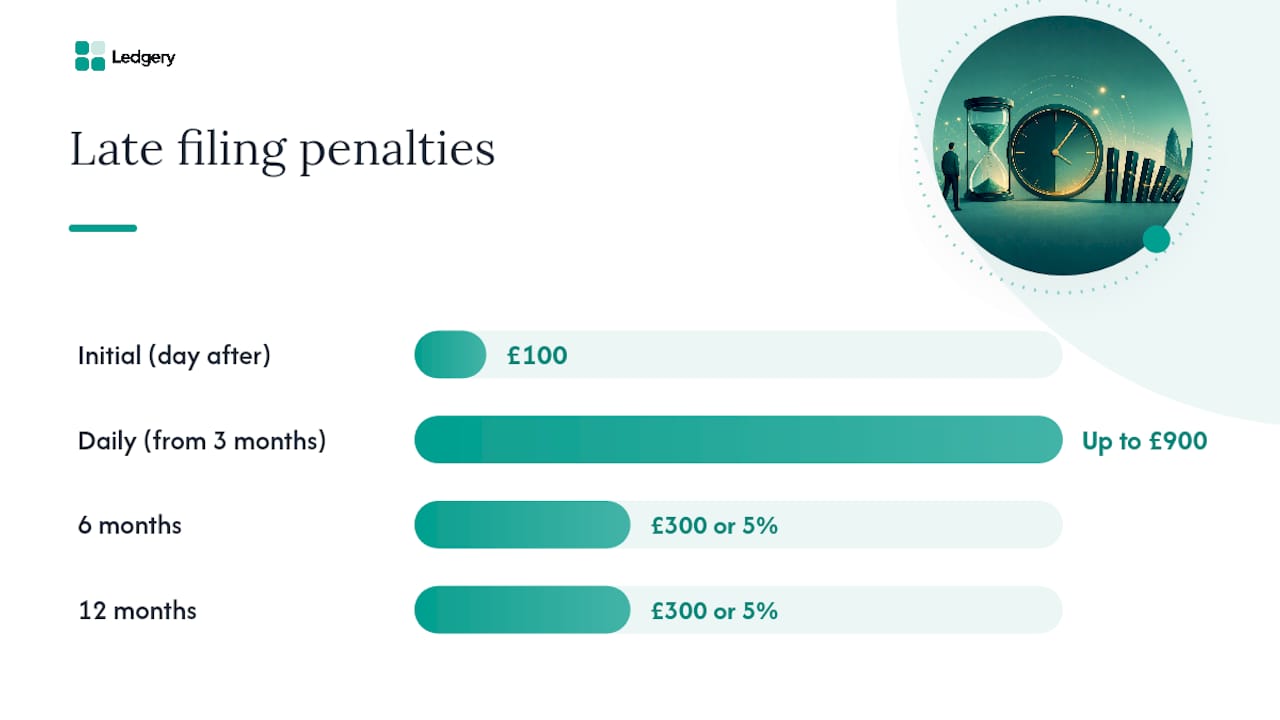
Miss the 31 January Self Assessment deadline and HMRC issues penalties automatically. The charges stack quickly: a £100 fixed penalty the moment the deadline passes, £10 per day after three months (up to £900), then further charges at six and twelve months. The single most important step if you have already missed the deadline is to file the return now, even if you cannot pay the tax owed.
Key penalties at a glance:
- Late filing: £100 immediately; £10 per day from month three (capped at £900); 5% of tax due or £300 (whichever is greater) at six months and again at twelve months
- Late payment: percentage surcharges at 30 days, six months, and twelve months
- Interest: runs from the original payment due date until the debt is cleared
- Failure to notify: separate penalties apply if you did not register for Self Assessment by 5 October after the relevant tax year
Pro Tip: Filing the return stops further late-filing penalties from accumulating and opens the door to a Time to Pay arrangement with HMRC. Waiting until you can pay before filing is one of the most costly mistakes a taxpayer can make.
Key takeaways
Late Self Assessment filing and payment penalties stack automatically, and the total can exceed the original tax bill within months if no action is taken.
| Point | Details |
|---|---|
| File immediately, even without payment | Filing stops late-filing penalties and opens Time to Pay options with HMRC. |
| Late-filing charges escalate fast | £100 on day one, up to £900 in daily penalties, then 5% or £300 at six and twelve months. |
| Late-payment surcharges are separate | Three automatic 5% charges at 30 days, six months, and twelve months, plus daily interest. |
| Appeal within 30 days with evidence | Submit form SA370 or appeal online; file the return first and gather dated documentary evidence. |
| Ledgery reduces the operational risk | Deadline alerts, receipt scanning, and quarterly reports help prevent the missed deadlines that trigger penalties. |
Table of Contents
- What are the self assessment penalties for filing late?
- How do late payment penalties and interest compound over time?
- How do you pay a penalty after HMRC issues a notice?
- How do you appeal a self assessment penalty and what is a reasonable excuse?
- How do you use the GOV.UK penalty estimator?
- What are behavioural penalties, failure to notify, and partnership rules?
- What practical steps help you avoid future penalties?
- The mistake most taxpayers make is the one that costs them most
- Ledgery helps you stay ahead of HMRC deadlines
- Sources
What are the self assessment penalties for filing late?
Gov a clear, time-based penalty structure for late Self Assessment returns. Each stage adds to the previous one, so the total rises the longer a return remains outstanding.
| Stage | When it applies | Penalty |
|---|---|---|
| Initial fixed penalty | Day after the filing deadline | £100 |
| Daily penalties | 3 months after deadline | £10 per day, up to £900 |
| Six-month penalty | 6 months after deadline | Greater of £300 or 5% of tax due |
| Twelve-month penalty | 12 months after deadline | Greater of £300 or 5% of tax due |
How the charges add up in practice
Example 1: Small tax bill. A taxpayer owes £800 and files nine months late. Total late-filing penalty: £1,300, which already exceeds the original tax bill.
Example 2: Larger tax bill. A taxpayer owes £6,000 and files fourteen months late. Total late-filing penalty: £1,600 before any late-payment charges or interest.
Where behaviour is found to be careless or deliberate, HMRC can apply behavioural penalty uplifts that push the percentage-based charges significantly higher. These are covered in more detail in the special cases section below.
Many people miss the Self Assessment deadline in the year Which? reported on, which shows how common late filing is. The penalties, however, are not discretionary. HMRC issues them automatically, and the burden of challenging them falls on the taxpayer.
How do late payment penalties and interest compound over time?
Late-payment penalties are separate from late-filing penalties and can run alongside them. HMRC’s legal framework sets out three automatic surcharges, each calculated on the unpaid tax:
- 30 days late: 5% of the unpaid tax
- 6 months late: a further 5% of the unpaid tax still outstanding
- 12 months late: a further 5% of the unpaid tax still outstanding
So a taxpayer who owes £5,000 and pays nothing for twelve months faces £250 at 30 days, another £250 at six months, and another £250 at twelve months: £750 in surcharges before interest is counted.
Interest is not technically a penalty. LITRG explains that it is designed to place HMRC and the taxpayer in a similar commercial position to the one that would have existed if the tax had been paid on time. In practice, that means interest runs from the original due date (usually 31 January) until the day the debt is paid in full. HMRC publishes the applicable interest rates and updates them when the Bank of England base rate changes. Even at modest rates, interest on a four-figure tax bill accumulates to hundreds of pounds over a year.
Pro Tip: File the return first, then contact HMRC about a Time to Pay arrangement. HMRC is more likely to agree a plan once the return is submitted and the debt is formalised. Time to Pay does not cancel penalties already issued, but it stops further surcharges accruing on amounts covered by the plan and limits the compounding interest cost.
How do you pay a penalty after HMRC issues a notice?
Once HMRC issues a penalty notice, the payment window is 30 days from the date on that notice. Missing this window means interest begins to accrue on the penalty itself, separate from any interest on the original tax debt.
GOV.UK’s penalty payment guidance lists the available payment routes:
- Online via HMRC’s portal: pay by debit card or corporate credit card through the Government Gateway
- Bank transfer (Faster Payments or CHAPS): use HMRC’s bank account details and include the penalty Unique ID as the payment reference
- Telephone: call HMRC’s Self Assessment helpline to pay by card
- Cheque: made payable to HM Revenue and Customs, with the penalty Unique ID written on the back, sent to the address on the notice
The penalty Unique ID appears on the penalty notice itself. Using it correctly ensures the payment is allocated to the right charge rather than sitting as an unallocated credit.
Steps to take immediately after receiving a penalty notice
- Check the notice carefully: confirm the tax year, the penalty type, and the amount stated.
- If the return is still outstanding, file it before doing anything else. HMRC will not consider most appeals until the return is submitted.
- Check whether you agree with the penalty. If you have grounds to appeal, note the 30-day appeal window from the notice date.
- If you agree with the penalty and can pay, do so within 30 days using one of the methods above, quoting the Unique ID.
- If you cannot pay in full, contact HMRC promptly to discuss a Time to Pay arrangement before the 30-day window closes.
How do you appeal a self assessment penalty and what is a reasonable excuse?
HMRC issues most late-filing and late-payment penalties automatically. The taxpayer must then make the case for cancellation. GOV.UK’s appeal guidance confirms that appeals generally must be lodged within 30 days of the penalty notice date. For late-filing penalties, HMRC expects the outstanding return to be filed before it will consider the appeal.
What counts as a reasonable excuse?
A reasonable excuse is a genuine, unexpected event that prevented timely filing or payment and that the taxpayer could not have planned for. HMRC accepts examples such as:
- Serious illness or hospitalisation of the taxpayer or a close family member
- Bereavement of a close relative shortly before the deadline
- HMRC’s own online systems failing at the point of submission
- A fire, flood, or theft that destroyed records needed to complete the return
- Postal delays outside the taxpayer’s control (for paper returns)
HMRC does not accept ignorance of the deadline, pressure of work, or a third party’s failure to file on the taxpayer’s behalf as reasonable excuses in most cases. The burden of proof rests with the taxpayer, and contemporaneous documentary evidence is critical. A letter from a doctor, a hospital discharge summary, or a screenshot of an HMRC system error message carries far more weight than a retrospective explanation.
Appeal checklist
- File any outstanding return before submitting the appeal
- Gather documentary evidence dated as close to the missed deadline as possible
- Note the exact date on the penalty notice and count 30 days forward
- Submit the appeal online via the Government Gateway or by post using form SA370
- If HMRC refuses the appeal, request a review by an HMRC officer not involved in the original decision
- If the review upholds the penalty, escalate to the First-tier Tax Tribunal within 30 days of the review conclusion
Pro Tip: Keep a contemporaneous record of any event that disrupts your ability to file. A brief dated note, a GP appointment confirmation, or a saved screenshot of a system error can be the difference between a successful appeal and a rejected one. Collecting evidence after the fact is harder and less convincing.
How do you use the GOV.UK penalty estimator?
The GOV.UK penalty estimator gives a basic calculation of likely late-filing and late-payment penalties before HMRC issues a formal notice. It is a useful starting point for understanding potential exposure.
To run an estimate, you need:
- The date the return was due
- The date you actually filed (or plan to file)
- The amount of tax due for the year
- Any payments on account already made
The estimator does not include all possible charges. It excludes penalties issued in earlier years, partial payments made after the due date, and certain historical adjustments that applied to specific tax years. It also does not calculate interest, which accrues separately and can add a significant amount to the total. Use the estimate as a floor figure, not a ceiling.
After running the estimate:
- Compare the figure against any penalty notice already received to check for discrepancies
- Add an estimate of interest using HMRC’s published rates to get a more complete picture of total liability
- If the estimate differs significantly from a notice you have received, check whether the inputs match the details on the notice before assuming an error
What are behavioural penalties, failure to notify, and partnership rules?
Some circumstances attract higher penalties or different rules entirely. These are not automatic in the same way as the standard late-filing charges, but they can result in substantially larger liabilities.
Behavioural and inaccuracy penalties
Where a tax return contains an inaccuracy, HMRC can charge a penalty based on the additional tax due. The percentage depends on the taxpayer’s behaviour:
HMRC’s compliance handbook sets out the statutory basis for these uplifts and explains that reductions are available where the taxpayer discloses voluntarily and cooperates fully. The distinction between careless and deliberate is significant: a genuine mistake in a complex calculation is treated very differently from an intentional omission.
Failure to notify
If you became liable to Self Assessment (for example, by starting self-employment or receiving rental income) and did not register by 5 October after the end of the relevant tax year, HMRC can charge a failure-to-notify penalty. The amount depends on how long the failure continued and whether the taxpayer disclosed voluntarily.
Partnerships and amended returns
In a partnership, each partner can be charged a separate late-filing penalty for the partnership return, in addition to any penalties on their individual return. Where an amended return reveals additional tax, the new liability generates its own interest and potentially new penalty timings from the date the additional tax became due.
What practical steps help you avoid future penalties?
Prevention is straightforward in principle, though it requires consistent habits. The following steps address the most common causes of late filing and late payment.
- Register on time. If you are newly self-employed or have started receiving rental income, register for Self Assessment by 5 October after the end of the tax year in which the income arose.
- Keep quarterly records. Reconcile income and expenses every three months rather than leaving everything to January. This also prepares you for Making Tax Digital (MTD) requirements, which will require quarterly digital submissions.
- Set deadline reminders. Add the 31 January filing and payment deadline, the 31 July payment-on-account deadline, and the 5 October registration deadline to a calendar with alerts set several weeks in advance.
- Capture receipts digitally. Paper receipts get lost. Photographing receipts as they arise and storing them in a digital system means records are complete when the return is due.
- Reconcile payments against HMRC statements. Check your HMRC online account periodically to confirm that payments on account have been correctly recorded and that no unexpected charges have appeared.
- File on time even if you cannot pay. This stops the late-filing penalty clock and makes a Time to Pay arrangement possible.
Tools that automate deadline reminders, capture receipts at the point of purchase, and generate quarterly summaries reduce the operational friction that causes most missed deadlines. Ledgery, for example, offers deadline alerts, receipt scanning, and quarterly HMRC-ready updates, which address the three most common practical causes of late filing for self-employed individuals and property owners.
Pro Tip: Splitting the task helps. Spend 30 minutes at the end of each quarter reviewing income, expenses, and receipts rather than reconstructing a full year’s records in January. A quarterly habit also means that if something goes wrong near the deadline, most of the work is already done.
The mistake most taxpayers make is the one that costs them most
There is a pattern that appears repeatedly among people who end up with large penalty bills: they delay filing because they cannot pay the tax. The logic feels sensible. The reality is the opposite. Filing without paying stops the late-filing penalties from accumulating. Not filing while waiting to find the money means both sets of charges run simultaneously, and the total can exceed the original tax liability within a few months.

The second common mistake is treating a penalty notice as something to deal with later. The 30-day windows for payment and appeal are firm. Missing them removes options. A taxpayer who files promptly, contacts HMRC quickly, and gathers evidence for a reasonable excuse has a realistic chance of reducing or cancelling a penalty. One who waits has fewer routes available.
Manual spreadsheets and paper records create a third category of risk. When records are incomplete or hard to locate, returns get delayed. When returns get delayed, penalties follow. The fix is not a more complicated spreadsheet. It is a system that captures information at the point it arises, so that filing is a matter of reviewing and submitting rather than reconstructing.
The appeal process is also more accessible than many taxpayers assume. HMRC does refuse appeals, and the First-tier Tribunal does uphold some of those refusals. But a well-documented reasonable excuse, submitted within the 30-day window with the return already filed, has a genuine prospect of success. The evidence matters more than the argument.
Ledgery helps you stay ahead of HMRC deadlines
Missing a Self Assessment deadline costs money that could stay in your pocket. Ledgery is built specifically for self-employed individuals and property owners who want to keep their tax records in order without spending hours on administration.
Ledgery’s deadline alert system notifies you before the 31 January and 31 July deadlines, giving you time to act rather than react. The receipt scanning feature captures expenses at the point they arise, so records are complete when the return is due. Each quarter, Ledgery generates an HMRC-ready update from your income and expense data, which means the information needed for your return is already organised. For anyone preparing for Making Tax Digital, this quarterly structure maps directly to the submission requirements ahead.
The first quarter is free. Start with Ledgery and see whether having organised, up-to-date records changes how you approach the January deadline.
Sources
The following official pages and guidance documents were used to compile this article.
- Self Assessment tax returns: Penalties
- Tax penalties and interest | Low Incomes Tax Reform Group
- What happens if you miss the self-assessment deadline? - Which?
This article is general information, not a substitute for advice from a qualified financial advisor. Consult a qualified financial professional about your own circumstances before acting on anything here.
Recommended
Self-employment and property income in one subscription, first quarter free. Join the early access list and we’ll email you once, when it opens.
Join early access